Samuel Jnr | Francis | Amy | Further reading
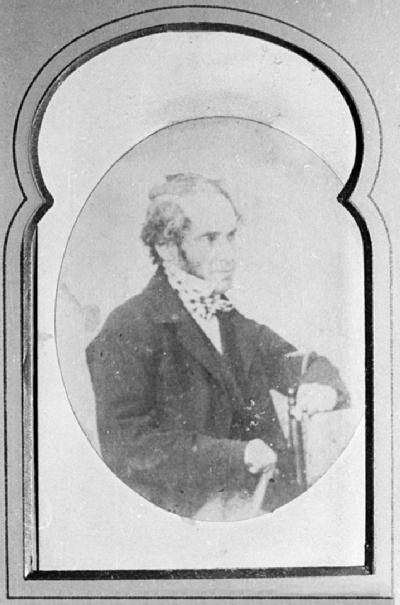 |
Samuel Greg (junior)Disillusioned visionary and humanitarian 6 September 1804 – 14 May 1876 The son of Samuel Greg of Quarry Bank Mill Samuel was well educated and had been on the Grand Tour of Europe. He married Mary Priscilla Needham in 1838 and they had two sons and six daughters. When they first came to Bollington the Gregs lived in Turner Heath House on Bollington Road (opposite Princess Drive). From 1838 they lived in the house built by Philip Antrobus for himself in Bench Lane (Flash Lane today) known today as The Mount, but he called it Mount. The position provided a fine view across the valley, and over Bollington to the hills in the east, as pictured by his daughter Amy in her watercolours in the late 1890s. |
They were a Godly family, Unitarians , and Samuel wrote a hymn inspired by Mount and the view …
Stay, Master, stay upon this heavenly hill;
A little longer, let us linger still;
With all the mighty ones of old beside,
Near to the aweful Presence still abide;
Before the throne of light we trembling stand,
And catch a glimpse into the spirit-land.
Stay, Master, stay! We breathe a purer air;
This life is not the life that waits us there;
Thoughts, feelings, flashes, glimpses come and go;
We cannot speak them—nay, we do not know;
Wrapt in this cloud of light we seem to be
The thing we fain would grow—eternally.
No, saith the Lord, the hour is past, we go;
Our home, our life, our duties lie below.
While here we kneel upon the mount of prayer,
The plough lies waiting in the furrow there.
Here we sought God that we might know His Will;
There we must do it, serve him, seek him still.
Samuel Greg was very much a humanitarian, an asset inherited from his Unitarian mother, Hannah Lightbody, and he recognised that his business could only thrive if his workers were well housed, adequately fed, in good health and properly educated. There was housing already at Lowerhouse and he built more together with a school/library in Moss Lane, encouraging children and adults to make use of them. He provided land for allotments and ensured that the families knew how to cultivate and grow vegetables. Some of these allotments remain in use today, though regrettably others have disappeared under tarmac and housing. He also built a bath house and laid out a playing field and children’s playground. Samuel Greg’s own description of all this was published in the 1830’s and you can find his letters here.
It was Samuel Greg who gave Lowerhouse the name of Goldenthal, German for Happy Valley. See origins.
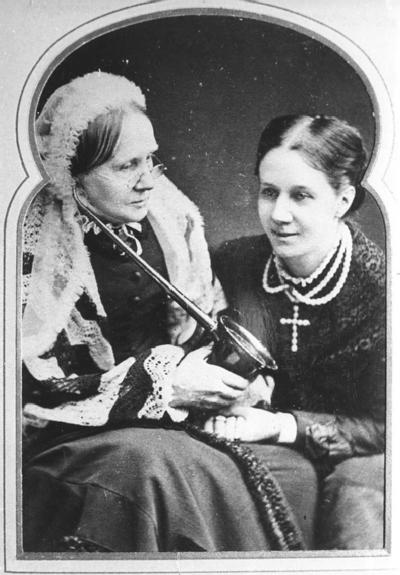
However, disillusionment set in when in 1846 the workers went on strike after Greg installed new machinery in the mill. He was so shocked at them turning against him that he went home to Mount, had a nervous breakdown, and, it is said, never set foot in the mill again. The business continued, despite its serious financially parlous state, being managed by other members of the Greg family and later by his nephew Francis – who later donated the Recreation ground to the town.
Samuel spent his time in retirement on literary and philosophical matters, he was a magistrate and patron of the Macclesfield Mechanics’ Institute. He was a visitor and speaker at the Society for Acquiring Useful Knowledge in Macclesfield.
An occasional visitor to Mount was the writer Elizabeth Gaskell – Mrs Gaskell. Her novels Mary Barton and North and South are said to have been influenced by her visits to Bollington with story lines taken from the industrial experiences of the Greg family.
|
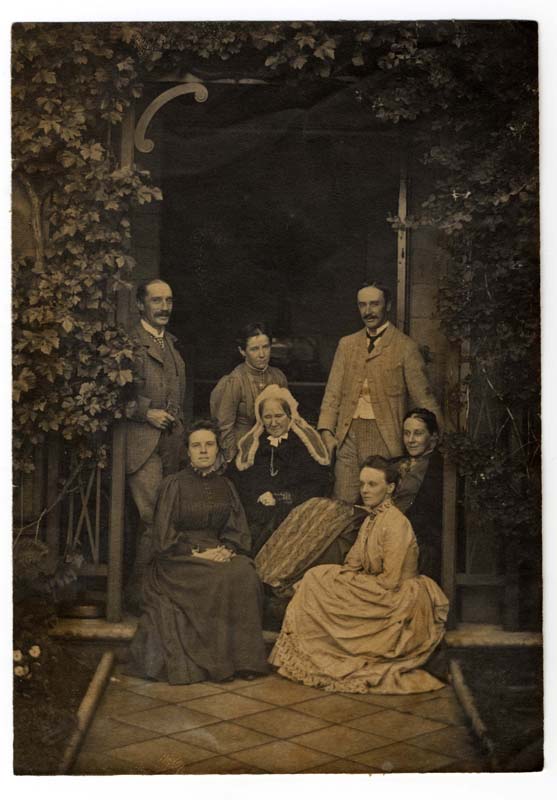
This tinted picture (click to enlarge) shows Mrs Mary Greg surrounded by, we believe, her children. The woman at front right is Miss Amy Greg. They are pictured in the front doorway at Mount. |

Amy Greg
Samuel and Mary Greg’s daughter – see her page.
Francis Greg
Francis was a son of John Greg of Caton, Lancashire, a nephew of Samuel Greg. Francis gave Gnathole to the town in 1901 for use as a recreation ground. He also built the Greg Fountain at Bollington Cross as a memorial to his family. He moved to Bollington in 1876 on the death of his uncle Samuel Greg.
Herbert Greg
Took over The Mount on 1st February 1900 (see his letter to his gardener, Isaac Turner).
Further reading
Letters believed to have been written by Samuel Greg junior were published in the 1830s. These describe activities at Lowerhouse mill.
Acknowledgements
Our thanks go to those who researched and discovered the history that is presented in these pages. Please read the full acknowledgement of their remarkable achievement. Unless otherwise noted, the historical pictures are from the Civic Society picture collection at the Discovery Centre and also available online .
.
Your Historic Documents
Please don't chuck out those historic documents and pictures! Find out why here.