
Extracts from a number of letters were published anonymously in Westminster Review in the 1830s. These clearly describe Lowerhouse mill and many aspects of life there. While anonymous they are attributed to Mr R H Greg, Robert Hyde Greg brother of Samuel junior, but the context and detail indicate that they could only have been written by Samuel. In any case Robert Hyde was away travelling around during much of the time described, 1832 – 1834.
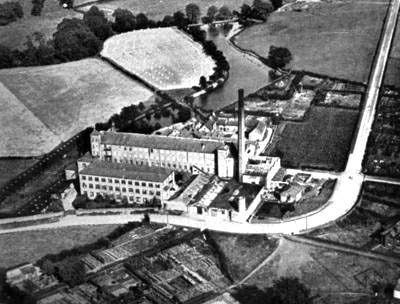
“My brothers and myself entered on this mill in the summer of 1832[1]. We found nothing but the bare walls of the building, with a worn-out water wheel[2] (which had to be almost remade), and about fifty cottages[3]; most of them well built, and of a pretty good size, but in extremely bad repair, and wanting many little accommodations, such as water, coal-sheds, cupboards, etc, which are so essential to cleanliness and comfort. There were only three or four families at this time on the spot, and my first care was to get rid of these aborigines[4], and start entirely de novo.
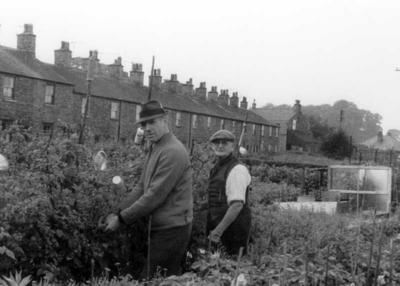
For the first two years we were almost entirely occupied with the mill itself; building, making reservoirs, erecting an engine, putting in shafting and machinery, preparing gas works, etc, and in collecting about us the requisite number of hands. In doing this, we endeavoured as far as possible to find such families as we knew to be respectable, or thought likely to be so, and who we hoped, if they were made comfortable, would remain and settle upon the place; thus finding and making themselves a home, and losing by degrees that restless and migratory spirit, which is one of the peculiar characteristics of the manufacturing population, and perhaps the greatest of all obstacles in the way of permanent improvement among them. Partly with this view, and partly for the sake of giving them innocent recreation for their leisure hours, we took three fields lying in front of the cottages, between them and the mill, and broken them up for gardens, which we divided with neat hedges, and gave one to every house[5]. Each garden is about six roods, and they are separated from each other by a neat thorn hedge. Besides these, they have most of them a little flower garden in front of their houses, or behind them; and the houses themselves have been made as comfortable as their size and situation would allow.
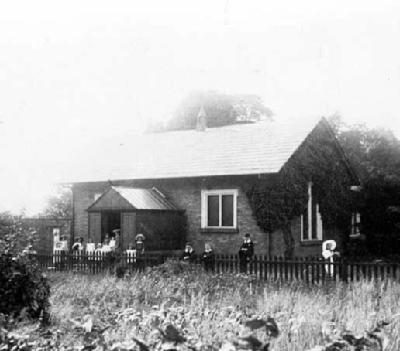
In the spring of 1834, the mill being then nearly completed, and a numerous population settled on the spot, I thought it time to establish a Sunday-school for our children, as there was no school in the neighbourhood to which they could conveniently go, or which could afford accommodation to so large an increase of numbers as those our little colony could supply. I first mentioned my wish to a few of our elders, who I thought most likely to engage in such an undertaking. They received the proposal very gladly, and offered their services in the management of the school, if we could succeed in establishing it. We then called a general meeting of all the men in the mill, laid our plan before them, and, as they all entered warmly into the scheme, and many proffered their services in the prosecution of it, we at once drew up our regulations, formed our committee, appointed some of the teachers, and opened the school I believe the next Sunday. We were for some weeks obliged to hold it in a cellar, for want of better accommodation, and we found many more children willing to attend, than we had the means of providing room for. I was at this time, however, occupied in making a school-room near my own house, and when this was finished, the girls, who were the most numerous, took possession of the new building, and left the cellar for the use of the boys. From that time the school has continued to flourish and increase in numbers. The girl’s school now contains about one hundred and sixty children, and the boys’ one hundred and twenty. Each school is under the management of a superintendent and a certain number of teachers who give their services gratuitously, and relieve each other by dividing the work in such a manner that each teacher is only obliged to attend every alternate or every third Sunday. They consist of men and young women entirely belonging to the mill. I take myself no active part in the management of the school, farther than spending an hour or two every Sunday in the room, and making such suggestions to the superintendent as I think necessary, which, if he approves them, are at once adopted; or if they involve any important change, are proposed at the next meeting of the teachers, which takes place every month, and which, in conjunction with the committee (a distinct body, however), transacts all the business relating to the school. The officers, such as the superintendent, treasurer and secretary, are chosen annually by the body of the teachers; and the committee is appointed in the same manner. The superintendent of the girls school, who is the head of the whole concern, and to whose zeal and exertions its success hitherto is mainly to be attributed, is himself, during working-hours, one of our dressers, and labours in the ranks as humbly and diligently as the lowest of his fellows; but when the week’s work is done, and Sunday morning rises to make the operative as free as his master, this worthy man assumes his long, black, clerical cloak, puts on a broad beaver, grasps his walking-cane, and is at once metamorphosed into a Methodist minister, a superintendent of the Sunday-school, a spiritual friend and pastor among his neighbours, and the most important and honoured man in our whole community.
We celebrate the anniversary of the establishment of our school by a general meeting and procession of all the children, on some Sunday in the month of June. They assemble in the morning, with their teachers, in my garden, and many of the parents come to at least to our eyes – and when they join together in singing I share the pleasure of the scene. It is, indeed, a beautiful sight – hymn, and the little silver voices of the younger children are heard mingling with the manly tones of their elders, and the deep bass of the accompanying instruments, we all pronounce our music to be excellent, and think no choir of a cathedral could be better.
In the autumn of the same year, 1834, we began our drawing and singing classes. The drawing class meets every Saturday evening during the winter, from six to half-past seven, and generally spends half the time in drawing, and the rest with geography or natural history. This class I teach myself; it consists of about twenty-five boys, and some of them have made considerable proficiency. They occupy themselves at home during the evenings of the week, with copying drawings that we lend them for the purpose, and this affords an interest for their leisure hours, and an attraction to their home fireside, which it was one of my chief objects in introducing this pursuit to supply. During the summer they continue the occupation or not, as they choose; but our regular lessons are given up, as our Saturday evenings are then spent more profitably in the play-ground, and we return to our winter occupations with more zeal and relish, after a long vacation, than if they had been continued without interruption the whole year. Some variety and change in our pursuits we find as necessary to keep up our own interest and attention as theirs.
As soon as the drawing class breaks up, at half-past seven, the singing class assembles and remains till nine. This class consists of girls and young men to the number of twenty-eight. It is entirely under the management of the superintendent of the Sunday school, who meets them once a week during winter, to teach them their different parts, and then brings them on Saturday evening to our large school-room, where they practise all together. We confine ourselves at present to sacred music; singing in four parts, and with the assistance of two instruments, make what we think very tolerable music. This class is very popular, especially with the girls, and it is considered a great privilege to be invited to join it.
As soon as the Sunday-school was fairly established, and no longer required my immediate attention, we began to think of establishing games and gymnastic exercises among the people. With this view we set apart a portion of a field near the mill, that had originally been designed for gardens, and taking advantage of a holiday and a fine afternoon, I called some of the boys together and commenced operations. We began with quoits, trap and cricket balls, and leap-frog; and as I saw that many others soon joined us, and our play-ground continued to fill more and more every evening it was opened, we gradually introduced other games, and established a few regulations to preserve order, assigning a particular part of the play-ground for different games, and appointing certain individuals to distribute and preside over them. The girls and boys each took their own side of the field, and generally followed their games separately. The following summer we erected a swing, and introduced a game called Les Graces, with bowls – a leaping bar – a tight rope – and afterwards a see-saw. Quoits are generally the favourite game of the men – the hoops and tight-rope among the boys – and the hoops and swing among the girls. The last is in perpetual requisition. With the hoops, the boys and girls now play a good deal together, and we encourage this companionship as being extremely favourable to the cultivation of good manners, kind feelings, and perception of their proper place, and relation towards each other. When we first began these games, this was a thing that had yet to be learned, and instances of rudeness and improper conduct did occasionally occur; but as I made a point of being always present on the ground, and gave our young ones to understand that I wished my leaving it to be the signal for the breaking up of the party, I had the opportunity of observing any breach of good manners or good temper, and gradually succeeded in breaking them in to my system. We are now near the close of the third summer since the play-ground was opened, and during this season we have not once had to remark upon any breach of order and decorum. Indeed, the system is now so well understood among us, that I no longer feel it necessary to be present during the games, though I generally am so, because I enjoy them as much as any of the party, and it is one of my chief opportunities of social intercourse with the people. The play-ground is open only on Saturday evening or holidays, during the summer. “One of the most successful of our plans, and the most effectual in civilising the manners of the people, has been that of having regular evening parties during the winter. The number at these parties is generally about thirty. They consist chiefly of the elder girls and boys, generally an equal number of each. They come by special invitation, a little printed card being sent to each, on which is written the day and hour when the party will take place. Much of the distinction shown to the guests depends on this individual invitation, and it is part of my plan to show as much respect as possible to those whom I invite to join our society. We do not invite all promiscuously, and among so many as we employ, there are necessarily some, who on my system, have never been at a tea party at all. We put those on our list whose manners and character mark them as in some degree superior to their fellows, or those who, we think, with a little notice and encouragement, and the advantage of good society, may gradually become civilised and polished; and I take care that no family that has any members of the proper age, who are tolerably respectable, shall be entirely left out, especially if they attend the Sunday school: – so that out of about three hundred people who are employed in the mill, and also live in our own colony, (for many who work in the mill live at a distance from it, and these it is almost impossible to introduce into our circle), I think my list of eligible guests amounts to about one hundred and sixty. Of these, however, the superior ones – the aristocracy of the place – are invited more frequently than others, both because the presence of some of these is absolutely necessary to make the party go off well, and because we wish to show our sense of their merit by more than ordinary attention and respect.
These parties are held in the school-room, which I have fitted up handsomely, and furnished with pictures, busts, etc, and a piano-forte; and as it is close to my house, the accommodations necessary for refreshments and amusements are easily supplied. Before the guests assemble, books, Saturday magazines, or drawings, are laid on the tables; and with these they amuse themselves till tea is brought in. The tea and coffee are then handed round to the company, and they continue to chat with me or with each other, and keep up a very tolerable amount of conversation till the meal is ended. I go about from table to table, and always find several among the company who are not only able to ask a question and answer one, but to keep up a conversation in a way that I think would surprise you. I never address myself to the whole company at once, and avoid, as much as possible, all unnecessary restraint or formality, endeavouring, as far as the case admits to carry on the party as if it were held in my drawing-room, and consisted of my own friends and equals in society. After tea, we fall to our games, which consist of piecing maps or pictures, spilicans, chess, draughts, building houses of cards, phantasmagoria, and several others of less note; while those who do not play, amuse themselves with reading, or discussing the news of the week or politics of the colony. Sometimes we have a little music and singing, and towards the end of the evening, we rouse ourselves with Christmas games, such as, fiercely, my lady’s toilet, blindman’s buff, etc, and soon after nine I bid them good night and they disperse.
I should have told you that there is a little ante-room attached to the school-room where the guests deposit their hats, bonnets, etc, and where there is a good fire; so that after their evening walk they come into the room dry and comfortable, and are generally dressed with a neatness and propriety, and even good taste, that do them great credit. The boys and girls sit at different tables during tea; but in the course of the evening the ranks are generally broken, and many of them join each other at the different games. The parties I have just described consist of the elder girls and boys of our colony. Occasionally, however, we have a junior party. These are generally the most pleasant ones, as the little restraint that is somewhat requisite among the elders, is here voted unnecessary and out of place, and there is much more laughing, fun and merriment among us. These parties take place about once in three weeks during the winter, on Saturday evening, the drawing and singing classes being given up for that day.”
References
1 Greg rented the mill from the estate of the late Philip Antrobus.
3 Long Row and others on Moss Brow and Moss Lane.