
(including Ingersley Crescent, and Clough Mill)
Listed structures | Development
 Known by older members of the community as Clough Road or even Race Road*, this is a cul de sac that starts by the end of Church Street and continues for half a mile to Waulk Mill waterfall. A stone paved footpath continues across the fields to Rainow village.
Approach off Church Street.
Leads to Dyers Close, Ingersley Crescent, Mill Lane (pedestrians and horses only). Ingersley Crescent is a development within the Vale, on the Tullis Russell bowling green and completed in 2020.
Nearest shops – Palmerston Street.
Nearest pubs – Church House, Poacher’s Inn (via Mill Lane).
Council Ward – From Church Street to Ingersley Crescent, East; from and including Ingersley Crescent to the end is actually in Rainow parish.
Ingersley Vale passes first between the Higher mills mill pond and a row of new houses built by Linden Homes (pictured above), then over the boundary into Rainow parish, past a 2020 development known as Ingersley Crescent (on the bowling green site), on to a small community of a farm house and four cottages all in stone. There is more about Higher mills history.
The site of Rainow mill industrial buildings, occupied to c.2010 by James McNulty’s glass works and an engineering works, stands prominently across the vale. To the left are three delightful stone cottages, Mill Cottages, and in front of those is the junction with Mill Lane, suitable only for pedestrians, bikes and horses.
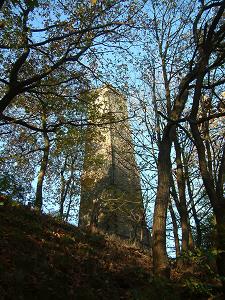 |
Once past Rainow mill the valley becomes deeper and very narrow. The waste ground to the left is the filled-in site of the Rainow mill pond. Here also is the entrance to the back of Ingersley Clough mill, now closed off and derelict, being prepared for redevelopment. The single track road passes to the right of the mill; it goes up and over a hump and down once again to the valley bottom. As you walk over this hump look up to the right and see the mill chimney standing in the field above (left). There is a tunnel under the road and up the hillside which once took the smoke from the boilers to the chimney. A little further see the historic (1800) iron aqueduct high across the road. This fed water from Clough Pool above the waterfall along the leat into the wheel house – read more on this below. |
 The impressive waterfall marks the lower end of Clough Pool, a mill pond for Ingersley Clough mill, built in 1803. Today this pond is almost totally silted up with just the stream running through it. The silt has built up to such an extent that trees grow on it – in fact the first generation of trees have already died off. The pool is now privately owned and being maintained as a nature reserve.
There appears always to have been a natural waterfall here. Only the top vertical part of the fall is man-made – necessary to create the pond behind. The water runs away beneath a fine stone bridge and through the rocky gorge and natural stone tunnel out into the valley behind Waulk Mill Farm house. This fall, of course, provided the valuable head for the mill lower down the valley. The water was carried to the mill along the hillside in a leat which is still visible. It is underground in front of the cottages but in an open ditch at the top of the field. At the mill it crosses the road in the small iron aqueduct and fed the wheel that used to be mounted in the big wheel house at the side of the mill. The wheel was about 56 feet in diameter, the second largest in mainland Britain – only that at Diggle was larger. There is more on this on the Ingersley Clough mill history page.
* This street is referred to as ‘Race Road also known as Clough Road’ in the borough council’s formal description of the Bollington & Kerridge Conservation Area. This is the only use of this name that we have yet come across. The word ‘race’ probably refers to a ‘mill race’ of which there are at least three along the street.
Listed structures
See Listed Buildings page for the full list and notes regarding Listed, Article 4, and SPD properties.
The links on the structures are to the Historic England web site. Any links to local history pages are to this web site.
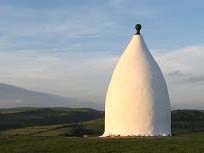 |
White Nancy monument ; II, Folly/summerhouse: 1817 for John Gaskell jr. of North End Farm. Accessible from local roads via public footpaths. (Local history page). ; II, Folly/summerhouse: 1817 for John Gaskell jr. of North End Farm. Accessible from local roads via public footpaths. (Local history page). |
|
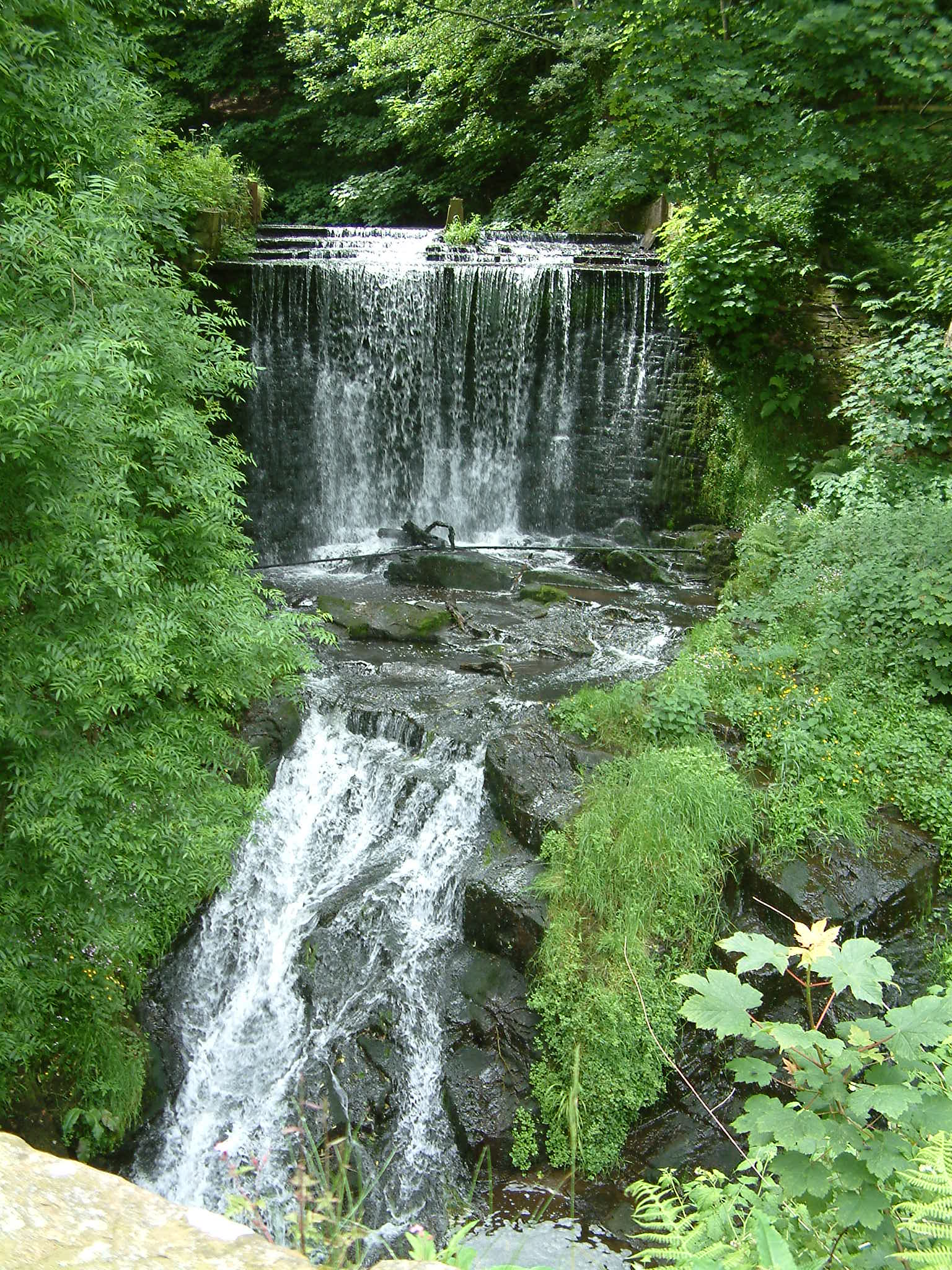 |
Clough Pool weir; II, built for Edward Collier, Ingersley Vale mill, dated 1800. |
Development
Ingersley Clough mill is not listed, and many of the mill buildings have been demolished, the remaining shell, the original mill, will also go, only the wheelhouse will remain.
November 2019: a planning application for a housing development is in preparation.
January 2021: work in progress to build a retaining wall across the bottom of a landslip.
Tullis Russell bowling green: The bowling green site was sold to developers and planning permission was obtained following prolonged and intensive opposition from the community, the Civic Society, and Bollington Town Council. Construction started in September 2019 and completed in November 2020. It is known as Ingersley Crescent.
January 2021: fencing for the site has encroached on the lane known as Mill Lane. When protests were raised it transpired that this part of Mill Lane was not recorded by the borough council as any type of public way. Steps are being taken to urgently obtain recognition as a public way.